
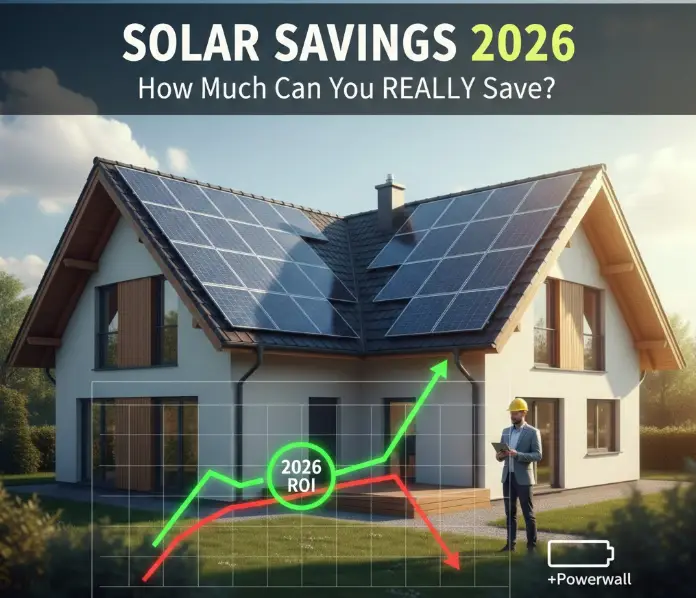
The New Energy Reality
As we enter 2026, the global energy landscape has shifted from a period of stability to one of extreme volatility. With traditional utility rates in North America and Europe rising at an average of 6-8% annually, homeowners are no longer viewing solar panels as an optional “green luxury.” Instead, they are seen as a critical financial hedge against inflation.
At EcoBuild Lab, we’ve analyzed the latest market trends, technological breakthroughs, and policy shifts. In this comprehensive 2026 guide, we break down the real-world costs, the shifting ROI (Return on Investment), and whether solar is still the smartest move for your home this year.
1. The Real Cost of Solar in 2026: Beyond the Sticker Price
In 2026, solar technology has reached a plateau of efficiency, meaning prices are more stable, but “soft costs” (labor, permitting, and marketing) still make up a significant portion of your bill.
Average Installation Costs
A typical residential system (8kW) currently ranges between $16,000 and $24,000 before incentives. However, the price per watt ($/W) can vary:
- Tier 1 Monocrystalline Panels: $2.50 – $3.30 per watt (Installed).
- Premium All-Black High-Efficiency Panels: $3.50 – $4.20 per watt.
Factors That Drive Costs Up
- Roof Complexity: If your roof has multiple gables or is made of slate/Spanish tile, expect a 15-20% labor premium.
- Electrical Upgrades: Many older homes require a main service panel upgrade (MPU) to handle solar input, which can add $2,500–$4,000.
- Micro-inverters vs. String Inverters: Choosing micro-inverters for shaded roofs adds cost but increases long-term energy yield.
2. The 2026 Incentive Landscape: Federal and State Updates
The financial “cushion” provided by governments is the biggest driver of ROI. Here is what the landscape looks like in 2026:
- The Federal Investment Tax Credit (ITC): Still holding strong at 30%. This means if your system costs $20,000, you get a $6,000 credit directly off your federal tax bill.
- Net Metering 3.0 (NEM 3.0): In many regions (pioneered by California), utilities have reduced the credit they give you for sending power back to the grid. This has made Battery Storage almost mandatory to achieve a high ROI.
- Local Rebates: Check for “Solar Renewable Energy Certificates” (SRECs) in states like New Jersey or Massachusetts, where you can earn hundreds of dollars annually just for producing clean energy.
3. Detailed ROI Analysis: The “Payback” Timeline
To understand the financial benefit, we must look at the Payback Period. This is the time it takes for the energy savings to equal the net cost of the system.
| Item | Estimated Cost/Value |
| Gross System Cost (8kW) | $20,000 |
| 30% Federal Tax Credit | -$6,000 |
| Net Investment | $14,000 |
| Estimated Annual Savings | $2,100 |
| Payback Period | 6.6 Years |
Since modern panels are designed to last 25-30 years, you are looking at nearly 20 years of pure profit after the system pays for itself.
4. Solar and Home Equity: The “Hidden” Profit
One of the most overlooked aspects of solar is the immediate increase in property value. Data shows:
- Homes with solar sell 20% faster than those without.
- The average home value increase is approximately $4,000 to $5,000 for every kilowatt of solar installed.
- In most jurisdictions, this increase is property tax-exempt, meaning you get the equity boost without paying higher taxes.
5. Technological Trends for 2026
If you are getting quotes this year, ensure you ask about these three emerging technologies:
- Bifacial Modules: These capture sunlight on both sides, increasing yield by up to 11%.
- Smart Energy Management Systems (EMS): AI-driven software that decides when to use your battery and when to pull from the grid.
- Solar Shingles (BIPV): Solar roof tiles are becoming more cost-competitive for homeowners needing a full roof replacement.
Frequently Asked Questions (FAQ)
Q: Does solar power work on cloudy days or during the winter?
A: Yes. While panels are most efficient in direct sunlight, they capture diffused light on cloudy days. In winter, cold temperatures actually improve conductivity, making panels more efficient as long as snow is cleared.
Q: What happens during a power outage?
A: Unless you have a battery backup, your system will shut off for safety (anti-islanding). With a battery, you can power essential loads independently.
Q: How long do residential solar panels actually last?
A: Most carry a 25 to 30-year warranty. They don’t stop working after that, but their output may drop to 85-90% of original capacity.
Q: Can I install solar panels myself?
A: While DIY kits exist, we recommend professional installation for grid-tied systems to ensure structural integrity and to qualify for the 30% tax credit.
Q: Will solar panels damage my roof?
A: No. When installed correctly, they protect your roof from UV radiation and weathering. Ensure your roof has at least 10-15 years of life left before installation.
Is 2026 the Year to Go Solar?
The era of “cheap” grid electricity is over. Between the 30% tax credit and the rapid rise in utility costs, the financial argument for solar has never been stronger. While the upfront cost can be daunting, the ROI of 6-8 years makes it one of the safest long-term investments a homeowner can make.











Leave a Reply