
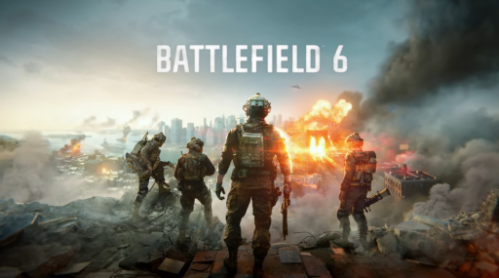
Since the release of the first Battlefield in 2002, this series has been renowned for its vast and chaotic multiplayer battlefield. Whether it’s urban ruins, desert battlefields, or snowy bases, every fight emphasizes tactical coordination, terrain utilization, and the variability brought about by destructive environments.
The Battlefield series has always had “All Out Warfare” — a large-scale war mode — as its core feature, attracting millions of players worldwide. After the controversial reception of Battlefield 2042, expectations for the new entry are focused on “regaining the classics” and “returning to battlefield scale.”
In this context, the debut of Battlefield 6 has drawn immense attention.
The Core Return of All Out Warfare
The debut of Battlefield 6 once again offers 64-player large-scale battles, continuing the core spirit of the series. Vehicle and infantry coordination, large-scale map design, and environment destruction return as the pillars of “massive warfare.”
Compared with Battlefield 2042, Battlefield 6 shows improvements in several areas:
- More natural weapon recoil
- Balanced close-range combat
- Reduced accuracy for jumping and aerial shooting
- Improved movement feedback
These changes make combat feel more realistic and strategically grounded rather than relying on exaggerated movements.
More importantly, the destruction system plays a key tactical role. Buildings, terrains, and objects are destructible, ensuring that no two battles play out the same. This dynamic battlefield continues to be one of the defining features of the Battlefield legacy.
Map Design Analysis
Mirak Valley – The Largest Debut Battlefield
Mirak Valley is the largest new map in Battlefield 6, combining open terrain with urban architecture.
Two unfinished skyscrapers dominate the center, surrounded by rocky hills and small settlements.
- The skyscrapers serve as core combat zones and strategic points.
- Inside, narrow staircases and confined rooms favor close-quarters combat.
- Exposed walls and windows make every position risky.
Thanks to the dynamic destruction engine, the buildings gradually deteriorate during combat: windows may collapse into half-walls, floors may crumble to create slopes — changing the tactical layout in real time.
Players can snipe from skyscrapers, control entry points with machine guns, or shift tactics mid-battle. Each match feels unique, emphasizing adaptability and strategic decision-making.
Operation Firestorm Remake – Classic Returns
The remake of Operation Firestorm, a fan-favorite from Battlefield 3, returns with a mix of nostalgia and modern updates.
Set in a massive oil refinery, it allows for intense firefights in warehou
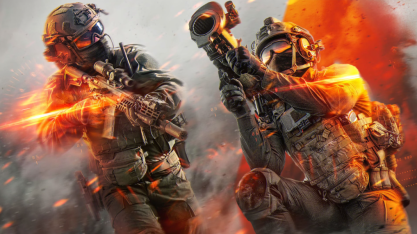
ses and long-range engagements along catwalks and metal stairs.
Key improvements:
- Enhanced visibility and battle routes
- Upgraded destruction effects
- Refined lighting and explosion realism
Despite modernization, the developers intentionally kept open danger zones to preserve the original tactical flavor — even if it challenges today’s players.
The refinery’s rooftops and elevated walkways provide strong sniper positions and tactical flexibility. While slightly smaller and less diverse than Mirak Valley, it stands as a nostalgic yet competitive map that bridges past and present.
Game System and Combat Feel
Four Major Career Designs
Battlefield 6 features four primary roles:
- Assault – frontline combat specialists
- Support – resupply and revive teammates
- Recon – snipers and decoy specialists
- Engineer – vehicle repair and defense setup
Unlike earlier titles, players can retain certain weapons and gear when switching classes (e.g., Assault soldiers can carry Support LMGs).
This adds flexibility and freedom, while each class still maintains unique skills and tools, preserving tactical identity.
Firearm Feel and Tactical Authenticity
Weapon handling is a major leap forward in Battlefield 6. Accuracy is now affected by movement, jumping, and airfire, discouraging unrealistic “jump shots.”
Each weapon’s recoil pattern and rate of fire demand control and precision.
The environmental destruction also reshapes the tactical landscape — blow up a wall to flank enemies or use debris as cover. Every match becomes unpredictable, intensifying the sense of immersion and realism.
Professional Analysis of Game Modes
Classic Modes
- Conquest – Capture and hold multiple objectives while maintaining team dominance.
Core Battlefield experience emphasizing teamwork and map control. - Breakthrough – Attackers push forward to seize strongholds, defenders hold the line.
Tests coordination, timing, and strategic teamwork.
New Mode: Escalation
Escalation introduces a new twist — gradually shrinking strongholds, forcing players into closer proximity as the battle progresses.
This increases chaos, urgency, and tactical pressure.
While less balanced than traditional modes, it provides high-adrenaline, fast-paced combat, suitable for casual players or those craving action-packed matches.
Series Historical Positioning and Market Outlook
Battlefield 6 represents a return to the franchise’s roots — large-scale warfare, environmental destruction, and tactical diversity.
After Battlefield 2042’s divisive reception, this installment rebuilds trust among veteran fans by emphasizing depth, teamwork, and immersion.
Compared to Call of Duty, Battlefield 6 maintains its unique edge in scale and strategic gameplay. It rewards team coordination over solo performance and embraces sandbox-style warfare, letting players dictate how battles unfold.
Conclusion: A Triumphant Return
Overall, Battlefield 6 successfully balances classic gameplay with modern innovation:
- Improved map design and destruction
- Refined combat mechanics and gunfeel
- Engaging new and returning game modes
Mirak Valley delivers vast, dynamic warfare; Operation Firestorm revives nostalgia with modern polish.
Together, they reflect the series’ legacy and forward momentum.
For players who crave strategic depth, large-scale battles, and immersive realism, Battlefield 6 stands as a milestone in the evolution of war shooters — and a powerful revival of the franchise’s core identity.












Leave a Reply