
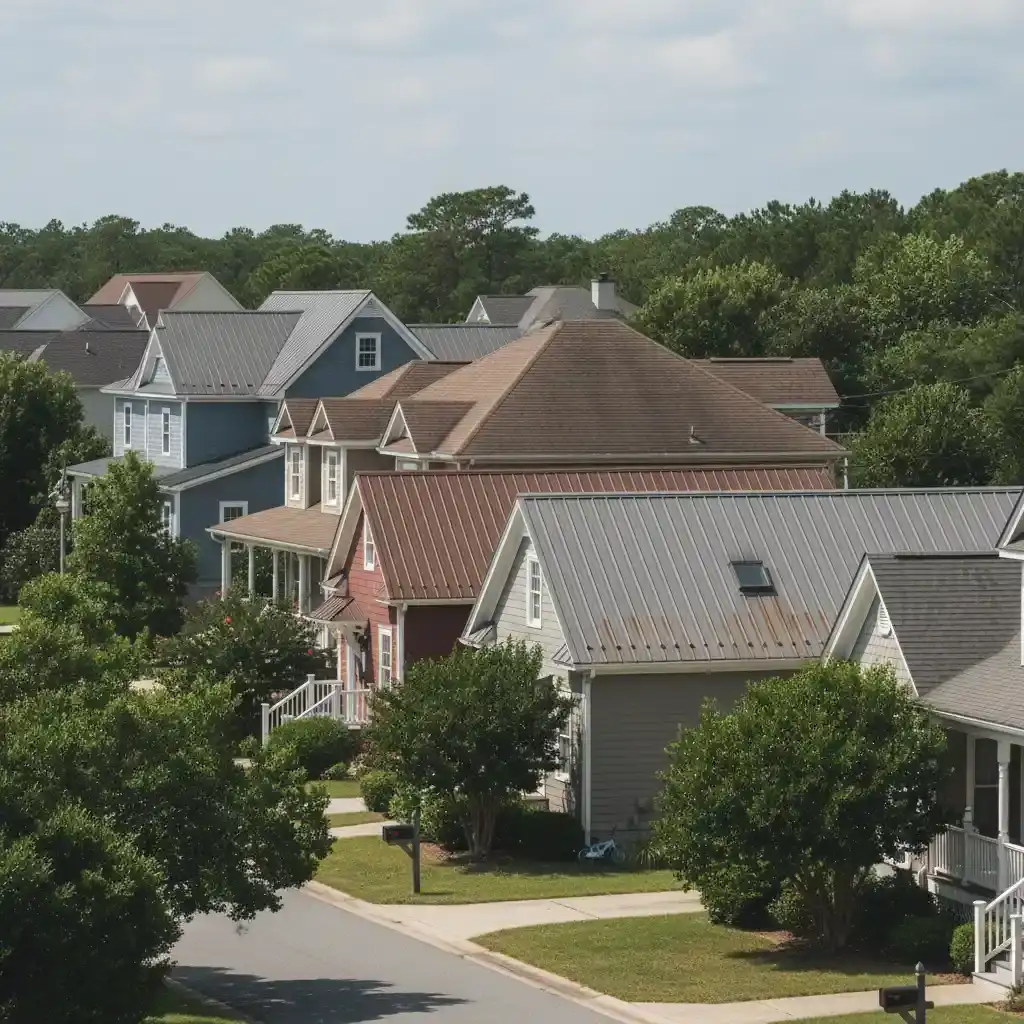
In Suffolk, Virginia, the residential environment offers a dual reality: the tranquil beauty of the James River and the latent climatic threats characteristic of the Atlantic coast. For local homeowners, a roof is far more than a structural component; it is the primary line of defense against Nor’easters, summer hurricanes, and the sudden, torrential downpours fueled by the moisture of the Chesapeake Bay.
When a roofing emergency strikes in Suffolk, homeowners are not merely dealing with a few missing shingles—they are facing a critical threat to their property’s integrity and their family’s safety.
1. Suffolk’s Geographic Climate: Why Your Roof is Constant “Combat Mode”
Suffolk sits on the coastal plains of Southeast Virginia, a location that subjects roofing materials to unique patterns of wear and tear.
- High Humidity and Saline Air: Constant high humidity combined with salt-laden air creates a corrosive environment for metal flashing and fasteners.
- Multi-directional Wind Loads: Coastal storms often feature dramatic shifts in wind direction. If a roof is not reinforced for “Coastal Wind Zones,” shingles are highly susceptible to uplift.
- Rain Intensity and Drainage Pressure: Suffolk frequently experiences high-intensity rainfall exceeding several inches per hour. If gutters or downspouts are even slightly obstructed, water can quickly back up into the eaves and infiltrate the building envelope.
2. Identifying an Emergency: When to Call for “Immediate Assistance”
A common mistake among homeowners is believing that a roof only requires emergency service if there is a visible hole. In reality, the following signs indicate your home has reached a breaking point:
- Shingle Trauma: If you find more than 3–5 asphalt shingles on your lawn after a storm, or notice significant curling at the edges, the roof’s seal has failed. The exposed underlayment can only withstand UV rays and rain for a very limited time.
- Decking Sag: If the ridgeline or eave line appears wavy rather than straight, it often indicates that the roof decking has rotted or failed due to chronic moisture. This is a structural hazard that could lead to partial collapse.
- The “Yellow Halo”: Do not ignore faint yellow or brown water stains on your ceiling. By the time a stain appears, water has already bypassed the shingles, underlayment, and attic insulation.
3. Technical Requirements for Coastal Virginia Roof Repairs
In Suffolk, a proper emergency repair must comply with the Virginia Uniform Statewide Building Code. A “quick fix” is rarely a lasting solution.
Critical Technical Components:
- Ice and Water Shield: While Suffolk doesn’t face the extreme freezes of the North, professional repairs must include ice and water shields at the eaves and valleys. This self-adhering waterproof membrane prevents “backdamming” caused by heavy rain or debris.
- Precision Flashing: Most leaks occur at transition points—chimneys, skylights, and wall intersections. Technicians must check for galvanic corrosion in aluminum or copper flashing and apply high-performance polyurethane sealants.
- Attic Ventilation Balance: Suffolk’s sweltering summers can push attic temperatures to 150∘F (65∘C). Without proper ventilation, shingles are essentially “cooked” from the inside out, halving their lifespan. A professional repair must verify the integrity of Ridge Vents and Soffit Vents.
4. Emergency Triage: What to Do While Waiting for Help
During extreme weather events, professional crews may be delayed by high demand. Homeowners should take these “self-rescue” steps:
- Relieve Interior Pressure: If the ceiling is bubbling, use a screwdriver to puncture a small hole in the center of the bubble to drain the water into a bucket. This prevents water from spreading horizontally and causing a larger ceiling collapse.
- Attic Inspection: If safe, enter the attic to identify the exact entry point and place plastic containers to catch drips.
- Document Everything: Take photos of the damage from ground level before any repairs begin. This is vital for Insurance Claims.
- Stay Off the Roof: Never attempt to climb a steep, wet roof during or after a storm. In Suffolk, the pitch and moisture make this a fatal risk for non-professionals.
5. The Claims Trap: Communicating with Insurance
In Virginia, frequent hurricanes mean the insurance process is rigorous and specific.
- Named Storm Deductibles: Many coastal policies feature a specific “Named Storm Deductible,” which is often significantly higher than a standard fire or theft deductible.
- ACV vs. RCV: Determine if your policy pays Actual Cash Value (depreciated) or Replacement Cost Value. ACV policies can leave homeowners with a massive out-of-pocket gap if the roof is older.
6. Prevention Over Cure: Annual Maintenance Checklist
| Task | Frequency | Focus Area |
| Gutter Cleaning | Bi-annually | Ensure downspouts are clear to prevent water from eroding the foundation or eaves. |
| Tree Trimming | Annually | Ensure no branches hang within 3 meters of the roof to prevent impact damage. |
| Drone Inspection | Recommended | Capture granule loss that is invisible from the ground. |
| Sealant Check | Annually | Inspect rubber “boots” around plumbing stacks for UV cracking. |
7. Conclusion
In Suffolk, Virginia, your roof is more than a building component; it is the shield for your family and your memories. Given the volatile coastal climate, “Rapid Response” and “Professional Quality” are non-negotiable. A cheap, rushed repair is often just the prologue to a much larger disaster.
If you suspect your roof was damaged in a recent storm, or you wish to fortify your home before the next hurricane season, consult a professional team holding a Virginia Class A Contractor License and deep expertise in coastal building codes.













Leave a Reply