
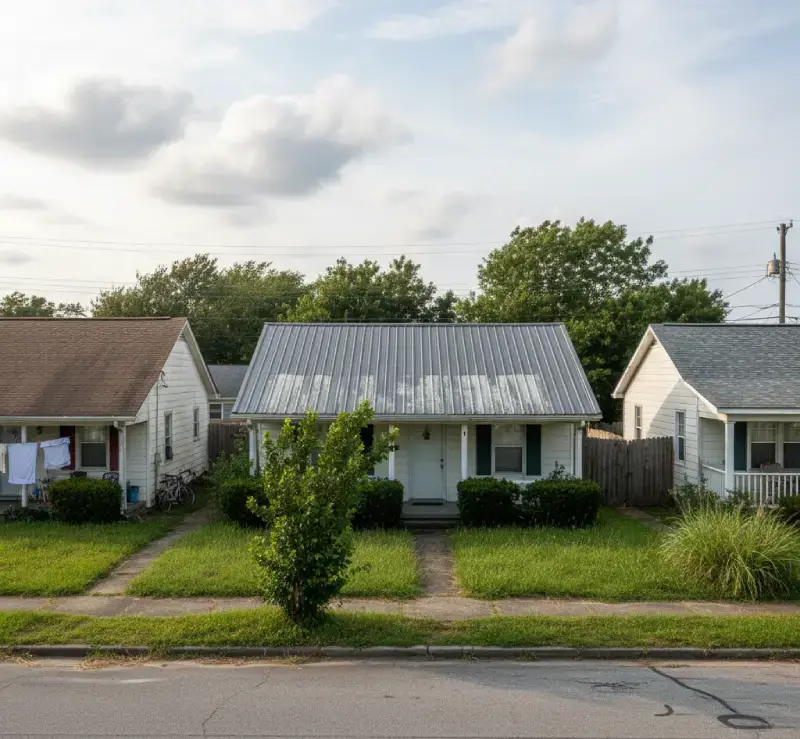
In Suffolk, Virginia, the arrival of spring is a double-edged sword. While the cherry blossoms at Constant’s Wharf provide a stunning backdrop, a more sinister transformation is happening beneath the surface of many local homes. For a Suffolk homeowner, a faint yellowish stain on a windowsill or a dime-sized dark spot in the corner of a ceiling is often dismissed as a “minor project”—something that can wait until the next paycheck or a free weekend.
However, in the unique geographical context of Suffolk—wrapped in the humid breath of the Great Dismal Swamp and subject to Atlantic coastal moisture—“waiting” is the most expensive word in a homeowner’s vocabulary.
I. The Biology of a Time Bomb: Why Suffolk is Different
To understand why a leak in Suffolk escalates faster than one in Phoenix or Denver, we must look at the local microclimate. Suffolk doesn’t just experience humidity; it lives within it. With average relative humidity levels often hovering above 70%, the city acts as a natural laboratory for organic decay.
1. The Dew Point and “Hidden Rain”
During a Virginia spring, temperatures can swing wildly. A warm, 75°F afternoon followed by a 50°F night creates a physical phenomenon called interstitial condensation. When humid air enters a home through a compromised seal or a lifted roof shingle, it doesn’t just sit there. It hits the cooler surfaces inside your wall cavities.
As the air cools, it reaches its dew point, releasing liquid water directly onto your wooden studs and fiberglass insulation. This is “hidden rain”—moisture that accumulates inside your house where the sun and wind can’t dry it out.
2. The Exponential Growth of Mold
Mold is not a slow-moving invader; it is an opportunistic colonizer. In the Suffolk climate, mold spores require only three things to trigger an outbreak: moisture, a food source (cellulose in drywall or wood), and stagnant air.
- The 24-48 Hour Window: This is the critical threshold. Once water saturates a porous material in Virginia’s humidity, mold spores germinate within 24 to 48 hours.
- The Hidden Colony: By the time you see a “small spot” on the outside of your drywall, the back of that drywall—the side facing the dark, damp wall cavity—is likely already covered in a thick, velvety mat of fungal growth.
- Structural Digestion: Mold doesn’t just sit on wood; it eats it. It secretes enzymes that break down the lignin and cellulose that give your home its structural integrity.
II. The Financial Evolution: From $100 to $10,000
In the world of Virginia real estate, there is a clear “evolutionary path” for a leak. Let’s break down the actual costs of ignoring a minor moisture issue over a 60-day period.
Stage 1: The Preventive Strike ($100 – $300)
Scenario: After a heavy April thunderstorm, you notice a damp patch in the attic. The Fix: Climbing onto the roof to replace three damaged shingles or re-caulking a window frame with high-quality silicone sealant. The Cost: A tube of sealant ($15) and a bundle of shingles ($60), plus two hours of DIY time. Even if you hire a local handyman, the service call is roughly $200. Outcome: The “envelope” of the house is restored. No further damage occurs.
Stage 2: Structural Seepage ($1,500 – $4,000)
Scenario: You ignore the spot for three weeks. The spot turns grey, and the room starts to smell “earthy” or musty. The Hidden Damage: Water has now soaked the fiberglass insulation. Wet insulation loses its R-value (insulating power), causing your HVAC system to work harder and your electric bill to climb. More importantly, the wet insulation acts like a sponge, holding water against the wooden frame of your house 24/7. The Fix: You must now cut out the contaminated drywall, discard the ruined insulation, apply professional-grade anti-microbial treatments to the studs, and repaint. Outcome: Expensive, but the house is saved.
Stage 3: The Catastrophic Remediation ($10,000+)
Scenario: Two months have passed. The mold has entered the “sporulation” phase. The Suffolk Factor: Because you’ve been running your air conditioning to combat the Virginia heat, the mold spores have been sucked into your HVAC return vents. They are now being distributed to every room in the house. The Cost: * Professional Remediation: Contractors must build “containment zones” with plastic sheeting and negative air machines ($5,000+).
- Structural Replacement: If the “dry rot” (fungus) has eaten into the floor joists or the main rim joist, the house must be jacked up for structural repairs ($10,000 – $20,000).
- Health Costs: The rise in respiratory issues for children or the elderly in the home—costs that are impossible to quantify.
III. The Suffolk Homeowner’s Survival Guide
In a high-humidity environment, home maintenance is not a “luxury”—it is asset protection. To avoid the giant repair bill, you must adopt a “Search and Destroy” mindset every spring.
1. The “Gutter to Ground” Strategy
Suffolk’s heavy tree canopy (especially our famous pines) means gutters clog quickly. A clogged gutter forces water upward under your roof shingles or downward into your foundation.
- Clear the Pine Needles: Do this twice in the spring.
- The 6-Foot Rule: Ensure downspouts carry water at least six feet away from the foundation. Suffolk’s clay-rich soil holds water; if it pools near the house, your crawl space will become a swamp.
2. High-Tech Monitoring
In 2026, there is no reason to guess about moisture.
- Smart Hygrometers: For less than $20, you can install sensors that alert your phone if the humidity in your crawl space or attic exceeds 60%.
- Moisture Meters: If you see a suspicious spot, a pinless moisture meter can tell you if the wall behind it is truly wet or just stained from a previous year.
IV. The Psychological Trap: “Normalcy Bias”
Why do so many smart Suffolk residents fall into this trap? It’s called Normalcy Bias. Because we live in a humid climate, we become desensitized to the signs of water damage. We assume a little musty smell is just “part of living in the South.”
We need a mindset shift: You do not own a static fortress; you own a living structure that is constantly being reclaimed by the humid Virginia environment. Every day you leave a leak unaddressed, you are essentially providing a “growth subsidy” to the mold.
Conclusion: The Cheapest Repair is Always Today
In Suffolk, a tiny leak is never just a leak—it is a financial fuse. The combination of coastal humidity and spring temperature swings makes our region one of the most aggressive environments for home decay in the United States.
Remember: The most expensive repair you will ever pay for is the one you could have fixed for $100 three months ago. Don’t let a $15 tube of caulk turn into a $15,000 structural disaster. Take a walk around your home this evening. Look at your window sills, check your attic after the next rain, and sniff the air in your crawl space. Your bank account will thank you.












Leave a Reply