
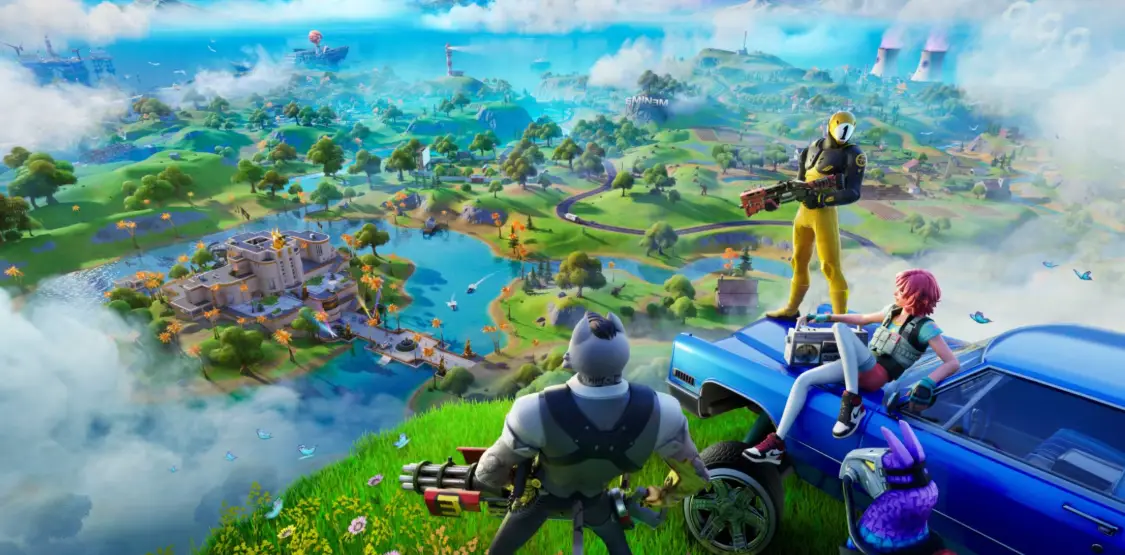
For many players across North America and Europe, Fortnite has long since crossed the line between “popular game” and “cultural constant.” First launched in 2017 and still maintaining a massive active player base years later, Epic Games’ flagship title has outlasted countless competitors in the battle royale genre—many of which launched stronger, looked more realistic, or promised deeper gunplay.
So why does Fortnite still matter?
The answer lies not in any single feature, but in a carefully constructed ecosystem that blends competitive gameplay, live-service evolution, and social interaction in a way few games have managed to replicate.
A Visual Identity Designed for Longevity
At a glance, Fortnite still looks nothing like its genre peers. Its bold colors, exaggerated animations, and cartoon-inspired character designs stand in sharp contrast to the gritty realism of franchises like Call of Duty: Warzone or Battlefield.
This was not a cosmetic choice—it was a strategic one.
By avoiding photorealism and graphic violence, Fortnite positioned itself as:
- More approachable for new players
- Easier to read in chaotic combat scenarios
- Far more compatible with streaming, spectating, and mainstream exposure
Years later, this visual clarity continues to pay dividends. In fast-paced engagements filled with player-built structures, visual readability is not a luxury—it is a necessity.
Building: Fortnite’s Most Divisive, and Defining, Mechanic 🧱
No discussion of Fortnite is complete without addressing its signature building system.
Unlike other battle royale titles, Fortnite allows players to instantly construct walls, ramps, floors, and complex structures mid-combat. What initially appeared to be a gimmick quickly evolved into the game’s most defining mechanic—and its greatest barrier to entry.
At high skill levels, building transforms combat into a rapid-fire test of:
- Mechanical execution
- Spatial awareness
- Resource management
- Split-second decision-making
The result is a skill ceiling that far exceeds that of most shooters. Gunplay alone is rarely enough; players must constantly adapt, reposition, and reshape the battlefield itself.
This system has helped Fortnite avoid stagnation. Even years in, matches rarely play out the same way twice.
A World That Refuses to Stand Still
Where many live-service games rely on cosmetic updates and balance patches, Fortnite treats change as a core design pillar.
Each new season introduces sweeping alterations:
- Major map revisions or complete overhauls
- New traversal mechanics
- Experimental weapons and systems
- Ongoing narrative events that permanently reshape the island
Epic Games is notably unafraid to remove beloved locations or mechanics if it serves the broader evolution of the game. This willingness to disrupt its own status quo is risky—but it keeps the experience feeling alive.
For long-term players, Fortnite becomes a shared history of disappearing landmarks and one-time-only events, creating a sense of collective memory rarely found in multiplayer shooters.
More Than a Battle Royale: A Social Platform 🎧
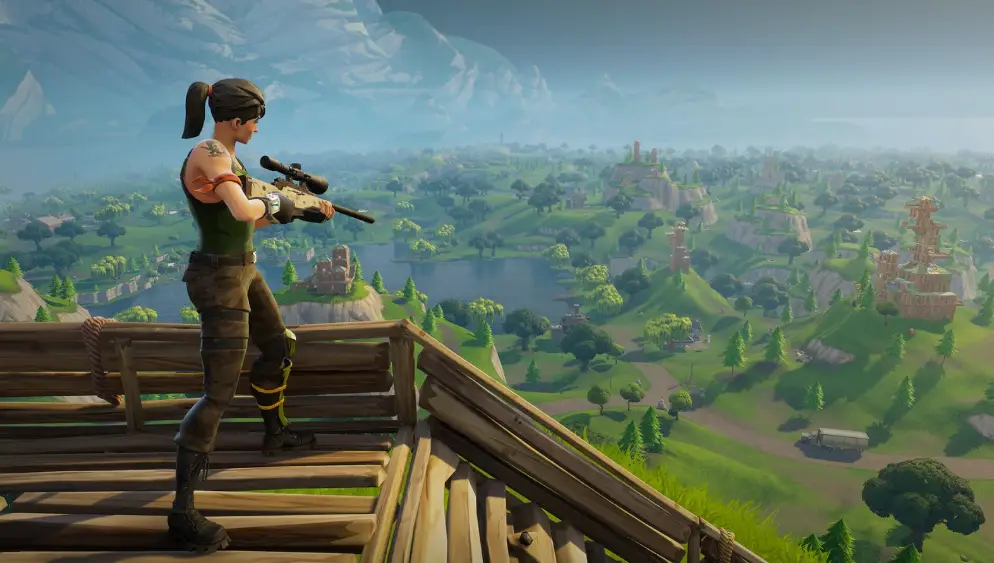
Perhaps Fortnite’s greatest strength lies outside traditional competitive design.
In Europe and North America, the game functions as a persistent social space. Players log in not just to win, but to:
- Hang out with friends
- Complete casual challenges
- Experiment with cosmetics and emotes
- Attend in-game concerts and live events
Epic’s emphasis on non-verbal communication—through emotes, dances, and visual expression—has proven especially effective among younger audiences. The game often feels less like a match-based shooter and more like a digital hangout that happens to include gunfights.
This social-first approach helps explain Fortnite’s remarkable retention, particularly during periods when competitive interest might otherwise dip.
Crossovers and Cultural Relevance
Fortnite’s crossover strategy is frequently imitated, but rarely matched.
From Marvel and DC to Star Wars, anime franchises, and major music artists, Epic has transformed licensed content into playable experiences rather than superficial cosmetics. Many crossovers arrive with bespoke events, themed locations, or gameplay twists that reinforce their presence in the world.
For Western audiences, these collaborations function as cultural touchstones—moments where gaming intersects with broader entertainment trends in a way that feels organic rather than forced.
Monetization: A Fair Model with Familiar Pressures 💰
Fortnite remains free-to-play, with monetization focused entirely on cosmetics and battle passes. Crucially, paid items provide no gameplay advantages, preserving competitive integrity.
However, the model is not without criticism:
- Premium skins can be expensive
- Limited-time availability encourages impulse purchases
- Younger players may be particularly susceptible to FOMO-driven design
Still, within the context of modern live-service games, Fortnite’s approach is widely viewed as fair—especially compared to titles that blur the line between cosmetic and competitive purchases.
Accessibility vs. Mastery: A Difficult Balance
Despite its broad appeal, Fortnite is not equally welcoming at all skill levels.
New players may struggle with:
- The steep learning curve of building
- Fast-paced high-skill matchmaking
- Rapid meta shifts introduced by frequent updates
Epic has attempted to mitigate this through ranked modes, bot-filled early matches, and zero-build playlists. These efforts help, but the gap between casual and competitive play remains significant.
That said, this complexity is also what sustains Fortnite’s esports scene and long-term engagement among dedicated players.
Final Verdict: A Living Game, Not a Static Product
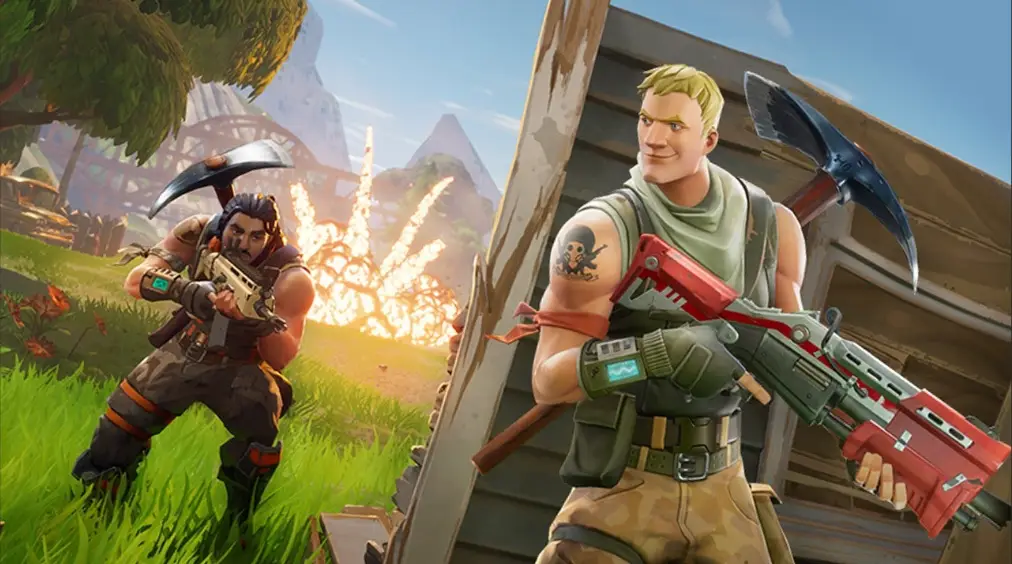
Fortnite endures because it refuses to remain static.
It is not the most realistic shooter, nor the simplest to learn. Instead, it is a constantly evolving platform that blends gameplay, social interaction, and cultural relevance into a single experience.
🎮 For Western audiences, Fortnite is less about chasing wins and more about participating in an ongoing digital world—one that continues to redefine what a live-service game can be.
Years after its release, Fortnite is no longer just competing within the battle royale genre. In many ways, it has moved beyond it.












Leave a Reply