
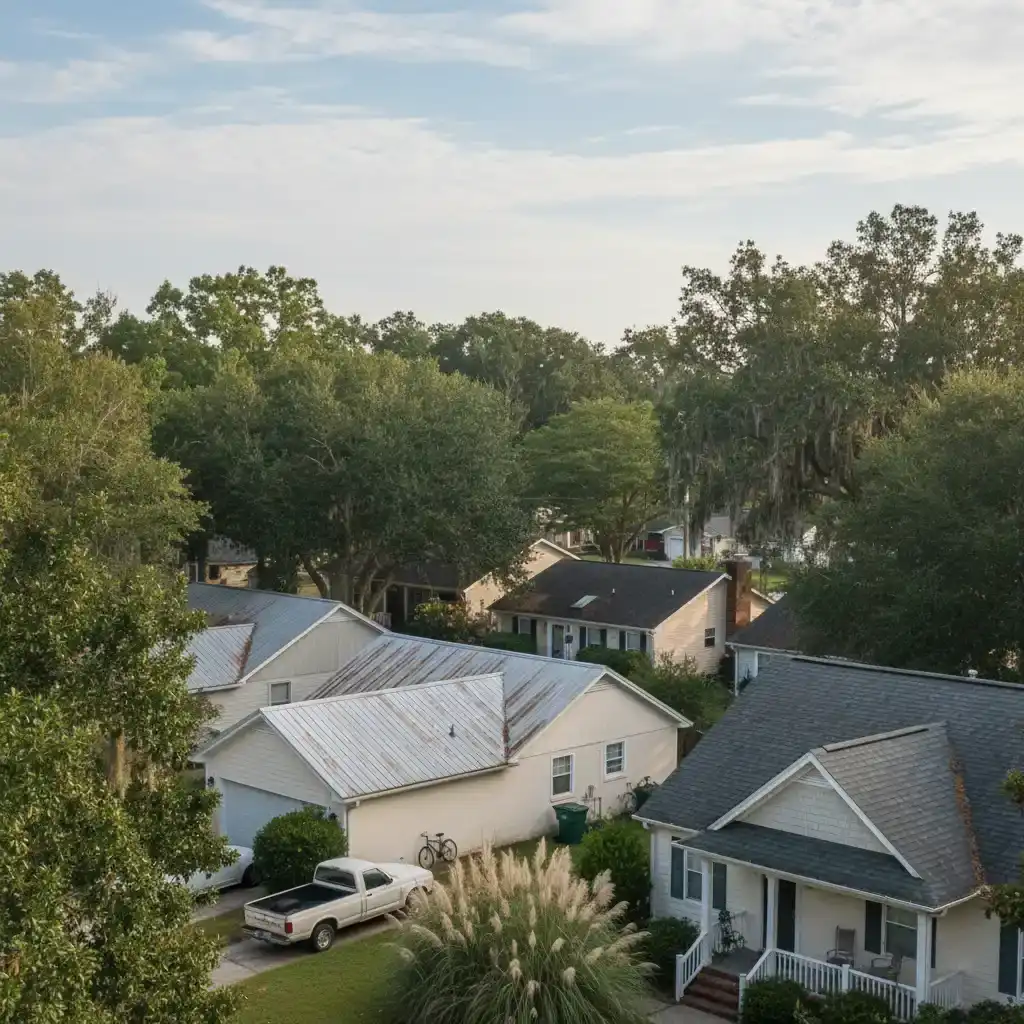
When a century-old oak or a towering pine decides to pay an uninvited visit to your living room, the sound is something you never forget. In the wooded stretches of Suffolk—whether you’re nestled near the ancient groves of Staverton Thicks or in a leafy suburb of Ipswich—this isn’t just a “bad day.” It’s a high-stakes race against the elements, structural gravity, and the intricate machinery of insurance companies.
If you are standing there right now, smelling the damp earth and splintered wood, take a breath. Here is your boots-on-the-ground guide to navigating the aftermath, protecting your equity, and ensuring your insurer doesn’t leave you out in the rain.
Phase I: The Immediate Response (The “Do No Harm” Hour)
In the adrenaline rush following a strike, most homeowners make the mistake of rushing into a “repair mindset.” Stop. You are currently in a “containment mindset.”
1. The Perimeter Check
Do not enter the impact zone. Modern roofs are designed as tension systems; when a heavy tree snaps a truss (the triangular wooden frame), the load is redistributed to walls that weren’t meant to carry it. One heavy gust of wind could cause a secondary collapse.
2. Utilities: The Silent Killers
Trees rarely fall cleanly. They drag down power lines and shift underground footings.
- Electrical: If you see any sagging lines, assume they are “live” and stay at least 10 meters away.
- Gas: If the root ball has “heaved” (lifted out of the ground), it may have fractured the gas main leading to your house. If you smell even a hint of rotten eggs, evacuate the property immediately.
3. Documentation is Your New Full-Time Job
Before any debris is moved, photograph everything.
- The Root Plate: Take photos of the base of the tree. This proves the tree was healthy and fell due to wind (an “Act of God”) rather than neglect.
- The Point of Entry: Show where the branch pierced the decking.
- Interior Damage: Document water dripping onto furniture or cracks in the drywall in rooms adjacent to the strike.
Phase II: Deciphering the “Falling Object” Clause
In the world of insurance, words like “proximate cause” determine whether you get a $30,000 check or a $0 denial letter.
The Definition of a “Falling Object”
Most standard homeowners’ policies (HO-3 in the US or standard UK buildings insurance) cover damage from “falling objects.” However, the object must have actually fallen due to an external force like wind or ice. If a dead tree has been leaning against your house for three months and finally pushes through the siding, the insurer may argue it was a “maintenance issue,” not a sudden loss.
The “Neighbor’s Tree” Myth
It is a common misconception that if a neighbor’s tree falls on your house, their insurance pays. This is false. Unless you have a paper trail (e.g., a certified letter you sent to the neighbor months ago warning them the tree was a hazard), your own insurance will handle the claim. They may try to “subrogate” (sue the neighbor’s insurer) later, but for now, you are responsible for your deductible.
Phase III: Critical Tree Removal & Structural Support
Warning: Do not attempt to chainsaw a tree that is resting on a structure. This is not like cutting a log on the ground.
1. The Physics of “Compression and Tension”
A tree on a roof is a loaded spring. As you cut pieces away, the weight shifts unpredictably. Professionals use cranes to lift the tree vertically off the house. Dragging the tree off the roof—a common amateur mistake—will strip the remaining shingles and destroy your gutters, damage that insurance might refuse to cover because it was “preventable during mitigation.”
2. Emergency Structural Shoring
Once the tree is off, a contractor must immediately install shoring. This involves:
- Dead-shore posts: Temporary vertical supports inside the house to prevent the ceiling from sagging further.
- Industrial Tarping: This isn’t a blue tarp from a hardware store. It involves “sandwiching” the tarp between 2×4 lumber strips screwed into the roof to ensure Suffolk’s gale-force winds don’t blow it off by morning.
Phase IV: Navigating the Claim (The Art of the Negotiator)
The insurance adjuster’s goal is to “return the home to its pre-loss condition.” Your goal is to ensure the home is safe and aesthetically consistent.
1. The “Matching” Battle
If the tree destroyed 25% of your slate or shingle roof, the insurer will offer to pay for that 25%. However, if the remaining 75% is weathered, your house will look like a checkerboard. In many jurisdictions, you can fight for a full roof replacement based on “aesthetic uniformity.” If the materials cannot be matched exactly, they may be required to replace the whole slope or the whole roof.
2. Hidden Structural Damage
Insist on an inspection of the top plates (where the roof meets the walls). A tree strike can “rack” a house—pushing the entire frame out of square. This leads to windows that don’t open and doors that stick months after the repair is done.
3. ALE: Your “Secret” Coverage
Check your policy for Additional Living Expenses (ALE). If your kitchen is unusable or the roof is open, the insurer should pay for a hotel and the “increased cost of food” (the difference between cooking at home and eating out). Don’t suffer in a construction zone for free.
Summary Checklist for the Next 24 Hours
| Task | Why it matters |
| Call an Arborist | To safely remove weight without further structural damage. |
| Notify Insurer | To get a claim number and start the “mitigation” clock. |
| Seal the Envelope | Get the roof tarped immediately; “secondary water damage” is often hard to claim. |
| Log Every Call | Write down the name, time, and ID number of every insurance rep you speak to. |
A Final Word on the Suffolk Landscape
We live here because of the canopy, but the canopy requires stewardship. Moving forward, have a certified arborist perform a “Tree Risk Assessment” every two years. It’s a small price to pay to ensure your next “thud” in the night is just a fallen branch, not a fallen oak.













Leave a Reply