
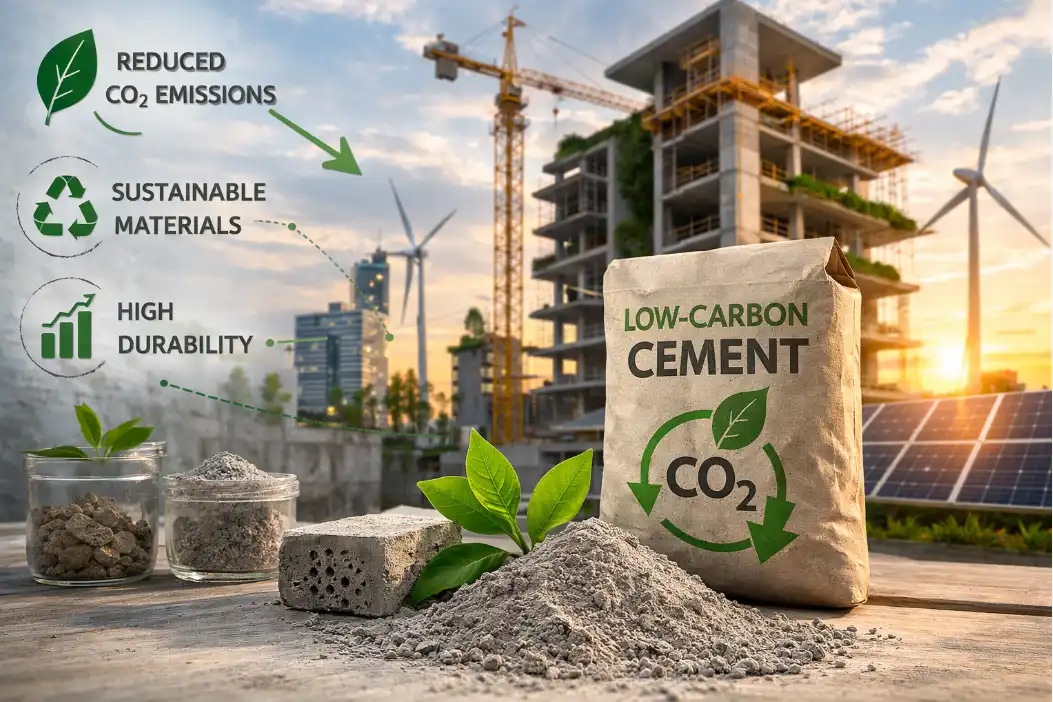
As the world intensifies its efforts to combat climate change, industries are coming under increasing pressure to reduce their environmental impact. The construction sector, a major contributor to global carbon emissions, has a significant role to play in this transition. Traditional cement production, responsible for around 7% of global carbon emissions, is one of the primary culprits. However, the emergence of low-carbon cement offers a promising solution that could revolutionize the industry, reducing emissions while maintaining high-performance standards for construction projects worldwide.
This article explores the innovation behind low-carbon cement, its environmental and economic benefits, and the growing market demand, making it an ideal topic for advertisers in the building materials, construction, and sustainability sectors.
1. What Is Low-Carbon Cement?
Low-carbon cement is an environmentally-friendly alternative to traditional Portland cement. It is designed to significantly reduce the carbon emissions associated with its production process, primarily by incorporating alternative materials and innovative technologies. Traditional cement production involves heating limestone (calcium carbonate) to extremely high temperatures, releasing carbon dioxide (CO₂) in the process. Low-carbon cement aims to address this issue through a variety of methods.
2. Key Innovations in Low-Carbon Cement
Several breakthrough innovations are helping to reduce the carbon footprint of cement production:
- Alternative Materials:
One of the most significant advancements in low-carbon cement is the use of alternative materials. By replacing a portion of the clinker (the key ingredient in cement), which traditionally makes up about 80% of cement’s carbon footprint, with industrial byproducts like slag, fly ash, and silica fume, carbon emissions can be reduced by up to 30-40%.- Slag Cement (Ground Granulated Blast Furnace Slag): This type of cement uses byproduct slag from steel production, offering a sustainable alternative that uses less energy and releases fewer emissions.
- Fly Ash Cement: Produced by replacing part of the cement with fly ash, a byproduct of coal-fired power plants, fly ash cement reduces waste and decreases CO₂ emissions.
- Carbon Capture and Storage (CCS):
New technologies are allowing cement plants to capture CO₂ during production, preventing it from being released into the atmosphere. The captured carbon can then be stored underground or used in other applications, contributing to overall emission reductions. - Lower Temperature Production:
Traditional cement production requires high temperatures (around 1400°C). Low-carbon cement technologies employ lower-temperature processes, reducing energy consumption and associated CO₂ emissions.
3. Environmental and Economic Benefits of Low-Carbon Cement
The shift toward low-carbon cement is not just a matter of environmental responsibility but also offers significant economic advantages:
- Reduction in Carbon Emissions:
The primary environmental benefit of low-carbon cement is its ability to reduce greenhouse gas emissions. For instance, using slag or fly ash in cement can reduce carbon emissions by up to 40%. Furthermore, using low-temperature production methods and carbon capture can bring reductions of up to 50%. - Circular Economy and Waste Reduction:
Low-carbon cement makes use of industrial byproducts such as fly ash and slag, contributing to the circular economy. These materials are typically disposed of in landfills or incinerated, but when used in cement production, they reduce waste and environmental pollution. - Long-Term Durability and Cost Savings:
In addition to its environmental benefits, low-carbon cement often results in more durable structures. Slag-based cement, for example, has superior resistance to corrosion, extending the lifespan of buildings and infrastructure. This means that in the long run, buildings constructed with low-carbon cement may require fewer repairs, ultimately saving money. - Potential for Cost Reduction:
Although the initial production costs of low-carbon cement may be higher due to the use of specialized materials, ongoing advances in production techniques and greater adoption of the technology are likely to reduce costs over time. Furthermore, the increasing demand for sustainable construction materials can drive economies of scale, making low-carbon cement more affordable in the future.
4. Market Demand and Policy Support
The market for low-carbon cement is rapidly expanding, driven by several factors:
- Government Regulations:
Governments around the world are implementing stricter regulations to limit carbon emissions in the construction sector. In the European Union, for example, the Green Deal sets ambitious targets to reduce carbon emissions, including for buildings and construction materials. Similarly, the United States is seeing a surge in state-level policies supporting sustainable building practices. These policies encourage the adoption of low-carbon cement in new construction projects. - Green Building Certifications:
Certifications like LEED (Leadership in Energy and Environmental Design) are becoming increasingly important for commercial buildings. Buildings that use low-carbon cement are more likely to receive these certifications, improving their marketability and appeal to investors and tenants. - Rising Demand for Sustainable Construction:
Both residential and commercial developers are increasingly turning to low-carbon cement as part of their commitment to sustainable construction. The growing demand for green buildings, particularly in urban centers, is creating opportunities for low-carbon cement producers to capture market share.
5. Case Studies: Low-Carbon Cement in Action
Several high-profile construction projects have already demonstrated the potential of low-carbon cement:
- The UK’s London Bridge Station:
The station underwent a significant renovation, incorporating low-carbon cement and achieving a reduction in carbon emissions. By using a high proportion of fly ash in the cement mix, the project demonstrated the viability of low-carbon cement for large-scale infrastructure. - The U.S. LEED-Certified Commercial Buildings:
In cities like New York and San Francisco, several commercial buildings have adopted low-carbon cement to meet sustainability targets. These projects often receive incentives from government programs and appeal to eco-conscious investors. - China’s Green Construction Initiatives:
In China, the government has been actively promoting the use of low-carbon materials in major infrastructure projects, with low-carbon cement playing a pivotal role in reducing emissions in large-scale urban development.
The Future of Low-Carbon Cement
Low-carbon cement represents a critical step in the construction industry’s efforts to reduce its environmental impact. By adopting this innovative material, builders and developers can not only comply with stringent environmental regulations but also meet the growing demand for sustainable, energy-efficient buildings. With increasing government support, evolving technologies, and a rising awareness of environmental issues, low-carbon cement is poised to become a central pillar of green construction in the years to come.










Leave a Reply